A life with an uncertain beginning
Start with what the record does not settle.
Prince Hall's exact birthplace and birth year remain disputed. Responsible historians usually place his birth in the 1730s or 1740s and avoid pretending the surviving evidence is more precise than it is. By the 1760s, however, Boston records place him within the city's free Black community as a working man, property holder, family man, and member of a Congregational church.
That uncertainty matters. It shows why good Masonic history must be researched, not merely repeated. The clearer record begins with what Hall did: he organized, petitioned, taught, spoke, and built durable institutions in a society that denied Black people equal protection and opportunity.
March 6, 1775
Fifteen men entered a fraternity that had refused them elsewhere.
Read this slowlyA military lodge prepared to leave Boston. Fifteen Black men stood in a country arguing about liberty while still denying it to them. They did not wait for history to become comfortable. They stepped forward, received light, and began building an institution strong enough to outlive the age that excluded them.
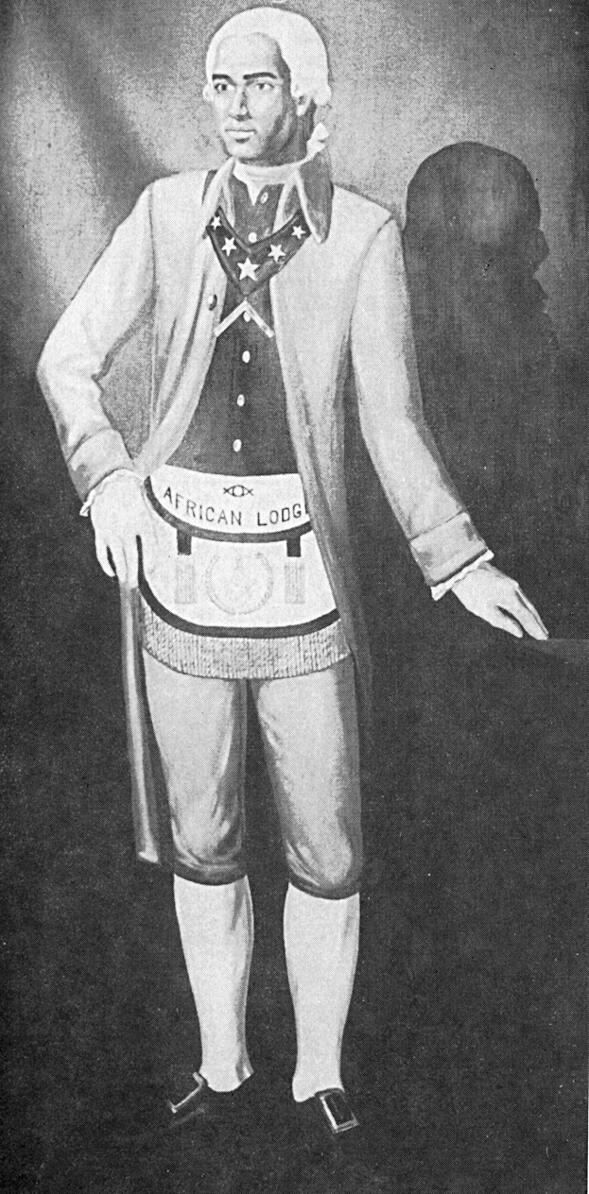
The Most Worshipful Prince Hall Grand Lodge of Massachusetts records that Prince Hall and fourteen other Black men were made Masons in Lodge No. 441, an Irish Registry military lodge attached to the British 38th Regiment of Foot at Castle William in Boston Harbor. After the regiment departed, a limited permit allowed the brethren to meet, process on St. John's Day, and bury their dead, but not yet to confer degrees.
African Lodge petitioned the Grand Lodge of England for a warrant in 1784. The warrant was issued on September 29, 1784, and eventually delivered in Boston in 1787. African Lodge No. 459 now possessed recognized authority to work as a regular lodge. That charter became the institutional root from which Prince Hall jurisdictions trace their Masonic lineage.
The petitions
His pen challenged slavery in the language of the Revolution.
The Library of Congress identifies Prince Hall among the leaders of a January 1777 petition asking the Massachusetts legislature to end slavery. The petitioners appealed to natural law, conscience, and Christian principles. Their argument exposed a national contradiction: a people demanding freedom from imperial rule could not honestly deny freedom to human beings in their own communities.
In 1788, after free Black sailors were kidnapped and carried toward sale in the Caribbean, Prince Hall, Primus Hall, and other Black Bostonians petitioned again. The National Park Service records that this pressure helped move Massachusetts to act against the slave trade and create protections against kidnapping into slavery.
Education as liberation
When the public school door stayed closed, the community built another door.
In 1787, Prince Hall and other Black Bostonians petitioned for equal access to public education. The National Park Service connects those efforts to the long history that eventually produced Boston's African School and the Abiel Smith School. When officials rejected early requests, Black families funded instruction themselves.
That is a key to understanding Prince Hall's Masonry. The lodge was not an escape from public life. It was a disciplined structure through which excluded men could practice leadership, preserve dignity, care for one another, educate the next generation, bury their dead with honor, and speak collectively.
A voice preserved
He left more than a name. He left words that can still be read.
The Library of Congress preserves Prince Hall's 1797 charge to African Lodge at Menotomy. It is a surviving primary source, not a later legend. In it, readers encounter a leader speaking to Black Masons about conduct, perseverance, faith, education, and the burdens of racial injustice.
Prince Hall died in 1807. In 1847, African Grand Lodge adopted his name. The strongest tribute to him is not to turn him into a flawless myth. It is to continue his actual work: serious learning, disciplined organization, moral courage, and service aimed at lifting a people.